

ON: Cats
The purr-fect companions throughout human history

Song of the Week: “Jellicle Songs for Jellicle Cats,” by Andrew Lloyd Weber - “Feline, fearless, faithful and true”
In the long months and years I spent writing my dissertation, there were few milestones I looked forward to as much as crafting my “Acknowledgments” page when I was finished. I knew I wanted to be equal parts playful and sincere, and to pay homage to the many people, works of art, and circumstances that had empowered me to finish the project. I thanked family members, dear friends, mentors, and even the three foods that had dominated the writing process: tater tots, coffee, and seltzer.
I knew from the beginning of writing, as well, that I would have to thank my cat, Minnie. We had adopted her for my birthday in September 2019, and she kept me company through writing my prospectus, studying for comprehensive exams, teaching on Zoom during the pandemic, and the long slow hours of writing and revising all 314 pages of my dissertation.
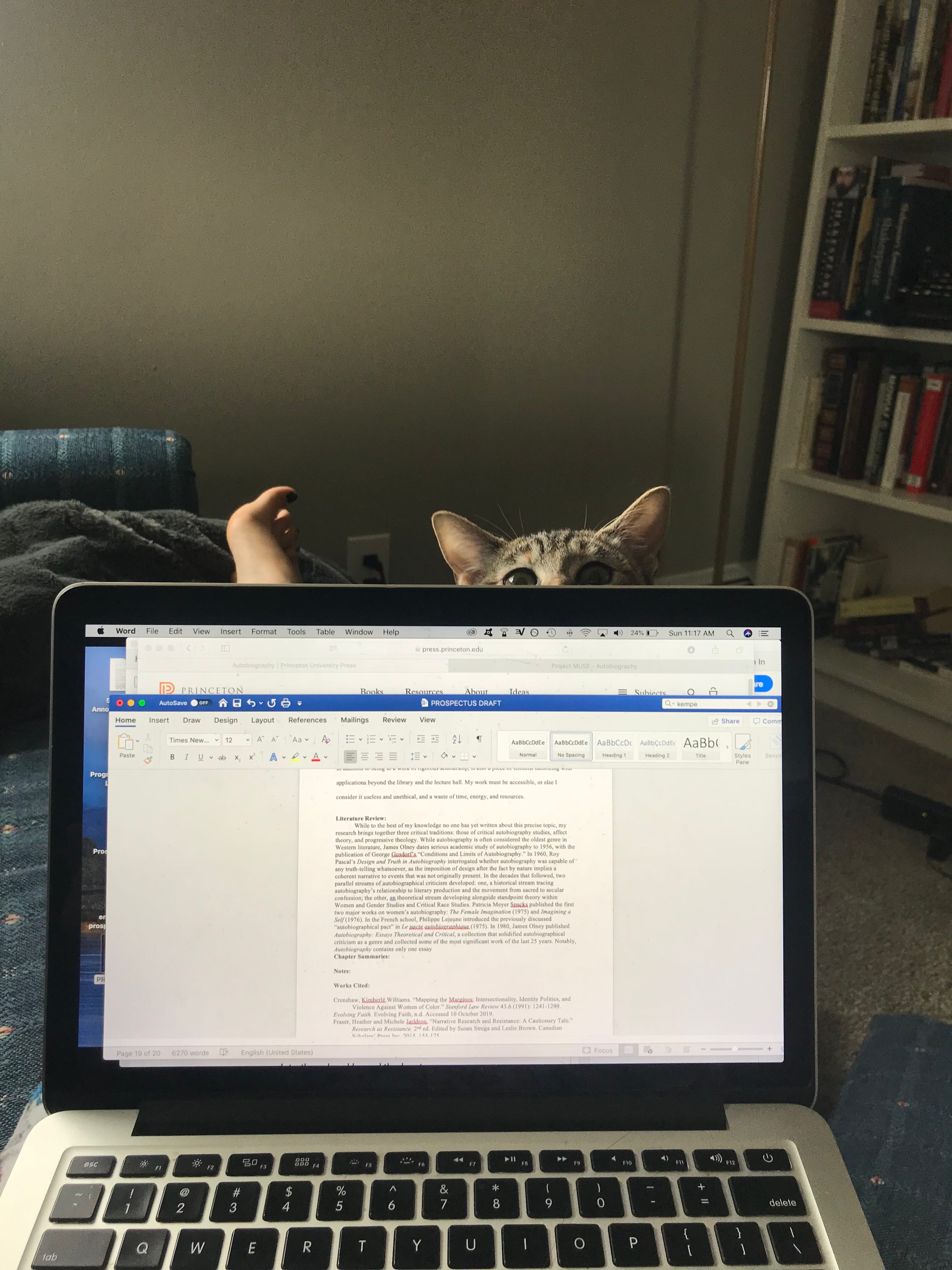
“To my cat, Minnie,” I wrote when I finally got to that “Acknowledgements” page, “my own Pangur Bán, who has provided affection, diversion, and quiet companionship through countless hours.”
The thanks was sweet and sincere - other than Taylor, Minnie really was my closest and truest companion in the three years of dissertation writing - but it was also a literary wink. “Pangur Bán” is the title of an Old Irish poem found in the Reichenau Primer, a notebook belonging to a 9th century Irish monk living and working in Reichenau Abbey, in modern-day Germany.1 The Primer contains a variety of notes and scribbles in various languages: Latin hymns, tables of Greek grammatical endings, astronomical information, annotations in Old High German, and several poems in Old Irish.
When he wrote “Pangur Bán,” that anonymous Irish monk likely saw the poem as a bit of self-indulgent and whimsical procrastination. As his more serious work has been forgotten, however, it is his frivolous little “waste of parchment” that has endeared him to millions of readers. Here’s Robin Flower’s 1912 translation:
I and Pangur Bán my cat,
'Tis a like task we are at:
Hunting mice is his delight,
Hunting words I sit all night.

Better far than praise of men
'Tis to sit with book and pen;
Pangur bears me no ill-will,
He too plies his simple skill.

'Tis a merry task to see
At our tasks how glad are we,
When at home we sit and find
Entertainment to our mind.

Oftentimes a mouse will stray
In the hero Pangur's way;
Oftentimes my keen thought set
Takes a meaning in its net.

'Gainst the wall he sets his eye
Full and fierce and sharp and sly;
'Gainst the wall of knowledge I
All my little wisdom try.

When a mouse darts from its den,
O how glad is Pangur then!
O what gladness do I prove
When I solve the doubts I love!

So in peace our task we ply,
Pangur Ban, my cat, and I;
In our arts we find our bliss,
I have mine and he has his.

Practice every day has made
Pangur perfect in his trade;
I get wisdom day and night
Turning darkness into light.
Don’t you love to picture him: this ancient monk, candles sputtering on the ink-stained desk, bundled against the chill the drafty scriptorium, watching his beloved little cat hunt for mice in a shadowy corner?
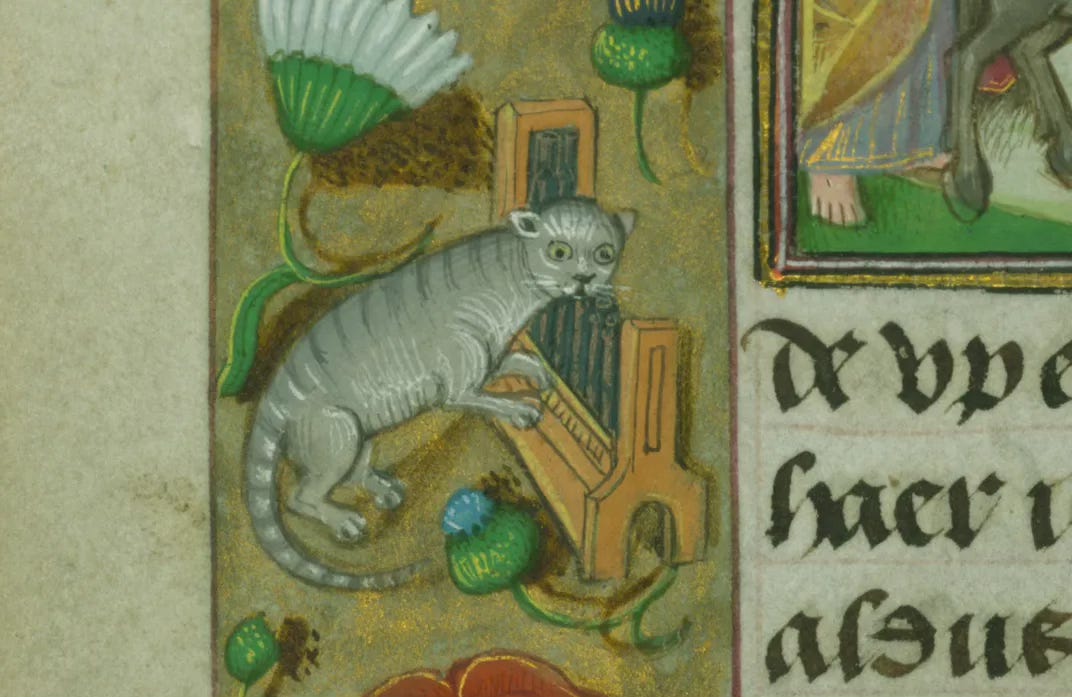
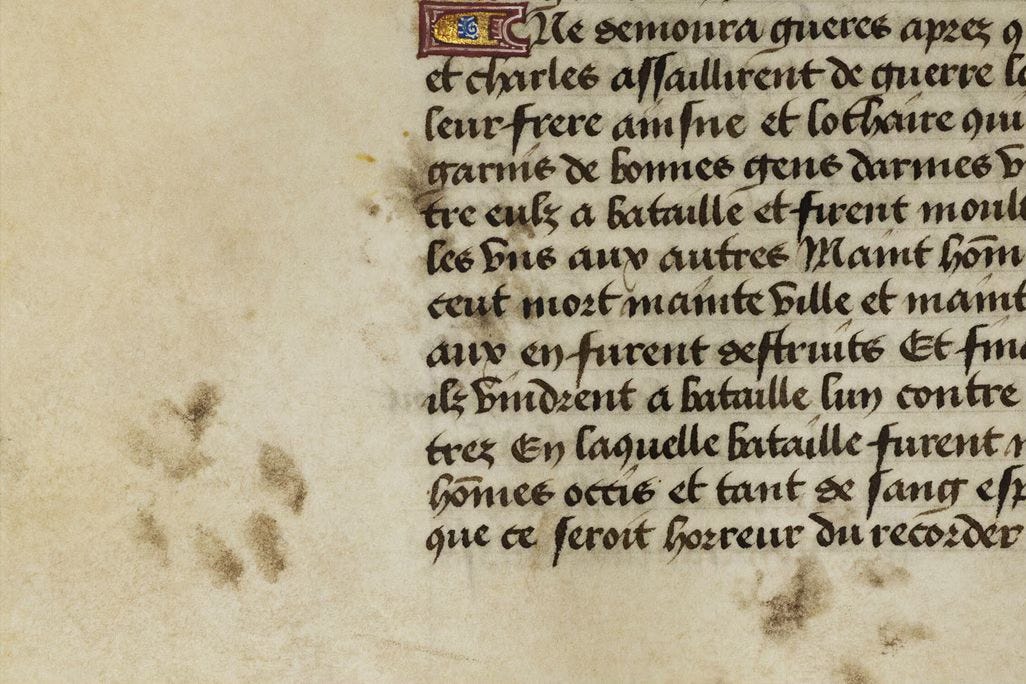
We know that cats were common in monasteries: they were a practical defense against rodents that stole food and spread disease, and their quiet movements and often-nocturnal lifestyle made them ideal companions for the strange hours kept by monks. As a 2026 exhibit at Baltimore’s Walters Art Museum demonstrates, cats show up frequently in artifacts created by monks. Playful pictures of them are featured in illuminated manuscripts, and a 15th century Flemish document features the inky pawprints of a cat who walked across the drying parchment and smudged the text!
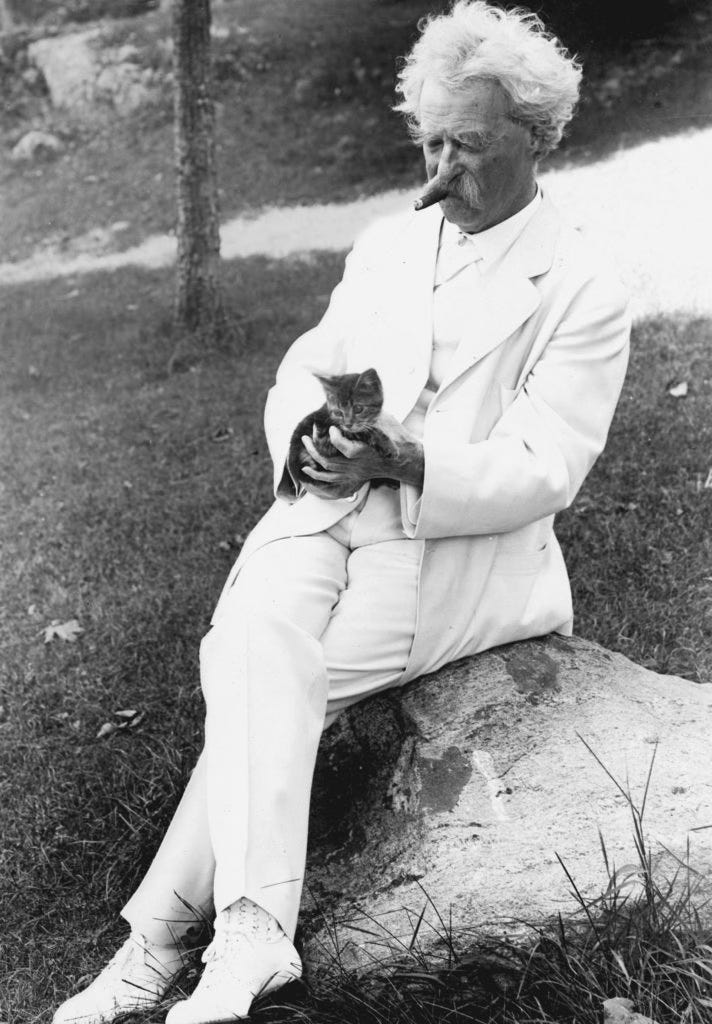
Long after the decline of the monastic system, cats have endured as the beloved companions of writers and scholars. Mark Twain kept eleven cats on his farm, and the descendents of Ernest Hemingway’s six-toed cats still live on his estate in Key West, Florida.
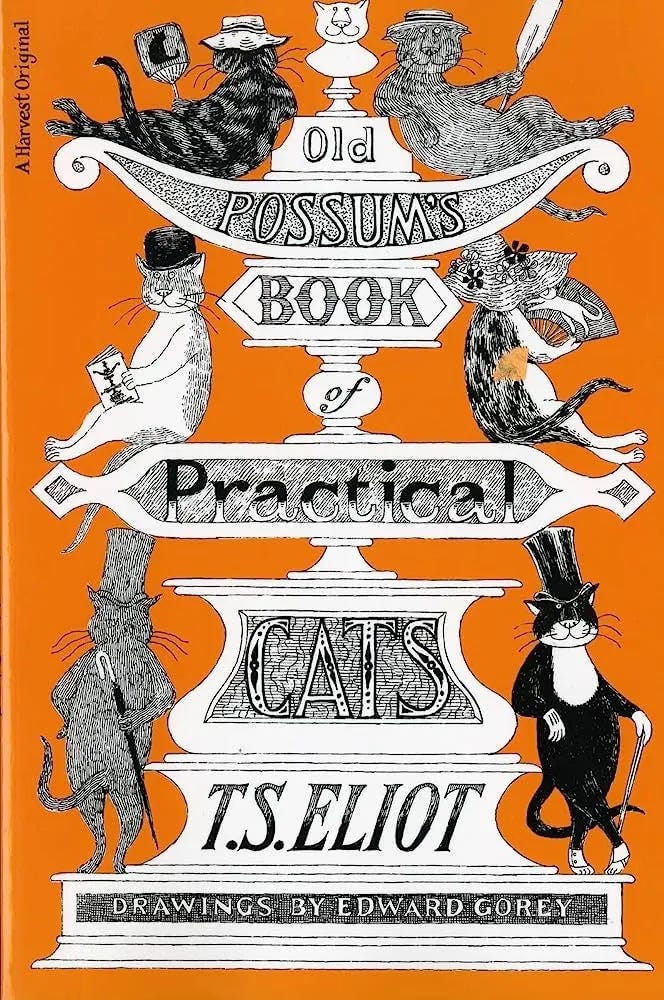
T. S. Eliot is most famous for his bleak modern poems like “The Waste Land” and “The Love Song of J. Alfred Prufrock,” but his own beloved cats also inspired the collection Old Possum’s Book of Practical Cats (1939), which Andrew Lloyd adapted into the 1981 musical Cats.2
Ursula K. LeGuin was fascinated by cats, and their simultaneous ability to be companions to humans while remaining stubbornly distinct. “The presence of a cat,” she wrote, “keeps me in touch with the mystery, the unreasonableness, the beauty, the stubborn wildness of the nonhuman world.”
I had a long and stressful day, filled with frustrations and deadlines and chores. By 8 pm, I was exhausted, and I still hadn’t decided on a topic for this week’s Syllabus. And so, like so many struck by writer’s block before me, my tired eyes rested on Minnie, who was peacefully snoring in her favorite armchair. In her honour - and in honour of Pangur Bán - here is my (by no means exhaustive) tribute to cats.
Joy of the Cat
Most anthropologists agree that dogs were domesticated from wolves over a long and intentional process that began at least 17,000 years ago.
Cats, by contrast, show up later on the scene - around 10,000 years ago - and some scholars speculate that cats domesticated themselves.
As Carlos A. Driscoll et al. note in a 2009 Scientific American article, cats are unique among domesticated animals: they are solitary by nature instead of living in groups, and they are obligate carnivores. “Such attributes,” they write, “suggest that whereas other domesticates were recruited from the wild by humans who bred them for specific tasks, cats most likely chose to live among humans because of opportunities they found for themselves.” With the rise of agriculture and the storage of grain, mice and other pests were drawn to human communities. Cats showed up and moved in, taking advantage of the steady supply of food and entertainment.

By 9,500 years ago, we have concrete evidence that humans loved cats as pets: in Cyprus, archaeologists found human remains buried with a variety of jewelry and keepsakes and, 40 cm away, the separate grave for an 8-month-old cat.
Of course, the most famous historical cat lovers are the ancient Egyptians, who respected cats so much that they legislated their protection, mummified them, and even turned them into gods. Egyptian hieroglyphics has a dedicated symbol for cats - miu - and they appear frequently in statues and paintings.
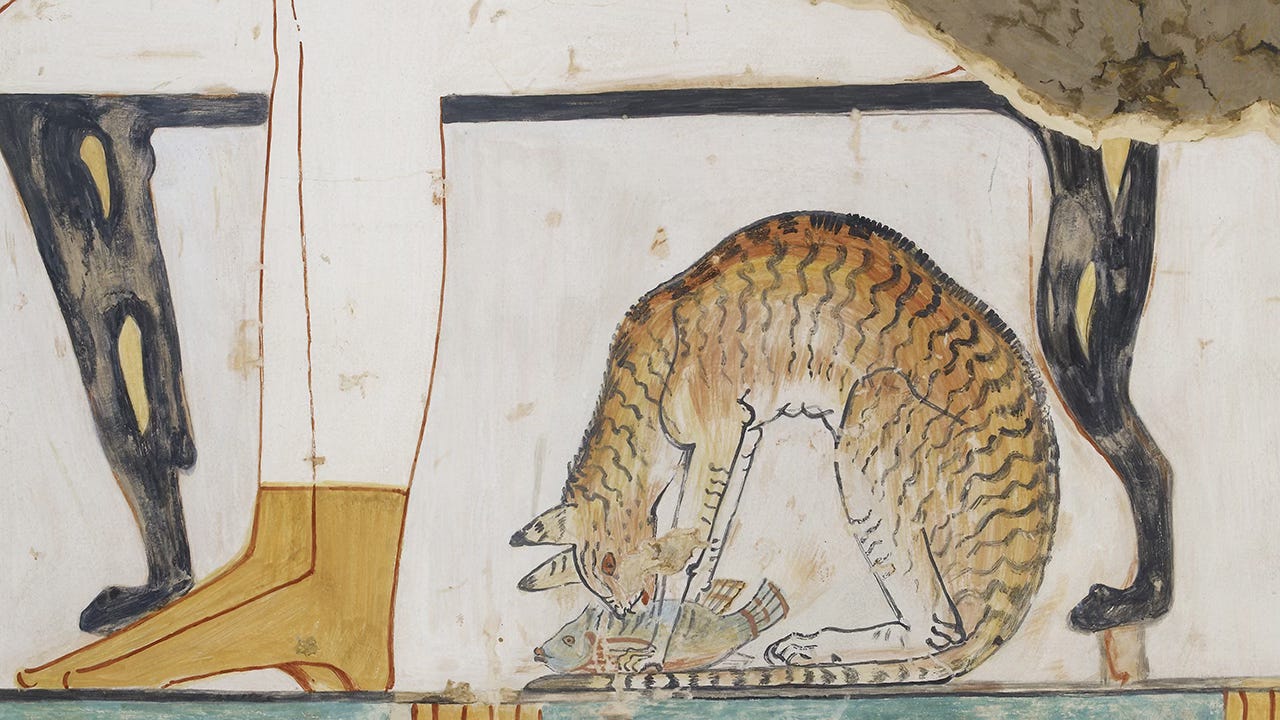
The first known named cat in human history lived during the reign of Thutmose III (1479-1425 BC). Her name, Nedjem, translates roughly to “sweetie.”
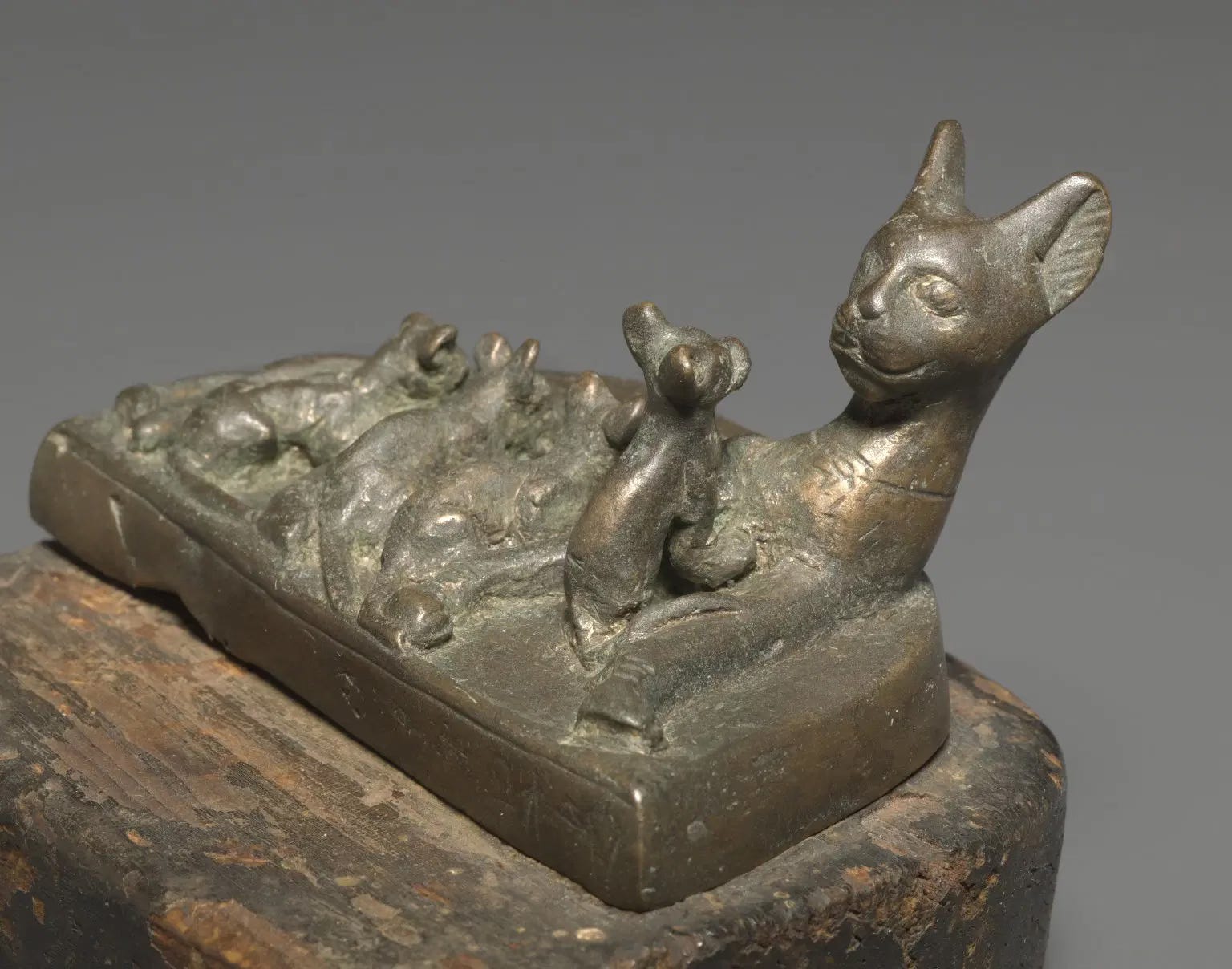
The ancient Egyptian goddess Bastet was traditionally depicted with the head of a cat: she first appears as a lioness goddess representing the power of the sun, but over the centuries she evolves into a gentler goddess with the head of a domestic cat. Unsurprisingly, considering cats’ vital role in pest control, Bastet is associated with protection against disease. More tenderly, she is sometimes described as a goddess of mothers and nurturers, and depicted surrounded by kittens.
Bastet is far from the only deity to be associated with cats, by the way: when the Ancient Greeks encountered Egyptian mythology, they adopted Bastet’s association with cats for the hunter Artemis. In Norse mythology, meanwhile, the goddess Freyja’s chariot is pulled by two large cats. Freyja was associated with love, sex, and fertility, and farmers would leave dishes of milk in their fields to seek protection for their crops from her magical cats.
While humans have attempted to domesticate several species of small wild cat, it is likely that all of the world’s contemporary housecats are descendents of the cats from the Fertile Crescent. As traders traveled throughout Europe, Africa, and Asia, they brought cats with them for both pest control and companionship.
We have one such account of cats’ arrival from the journal of a 9th century AD Japanese Emperor Uda.
On the 6th Day of the 2nd Month of the First Year of the Kampo era. Taking a moment of my free time, I wish to express my joy of the cat. It arrived by boat as a gift to the late Emperor, received from the hands of Minamoto no Kuwashi.
The color of the fur is peerless. None could find the words to describe it, although one said it was reminiscent of the deepest ink. It has an air about it, similar to Kanno. Its length is 5 sun, and its height is 6 sun. I affixed a bow about its neck, but it did not remain for long.
In rebellion, it narrows its eyes and extends its needles. It shows its back.
When it lies down, it curls in a circle like a coin. You cannot see its feet. It’s as if it were circular Bi disk. When it stands, its cry expresses profound loneliness, like a black dragon floating above the clouds.
By nature, it likes to stalk birds. It lowers its head and works its tail. It can extend its spine to raise its height by at least 2 sun. Its color allows it to disappear at night.
I am convinced it is superior to all other cats.
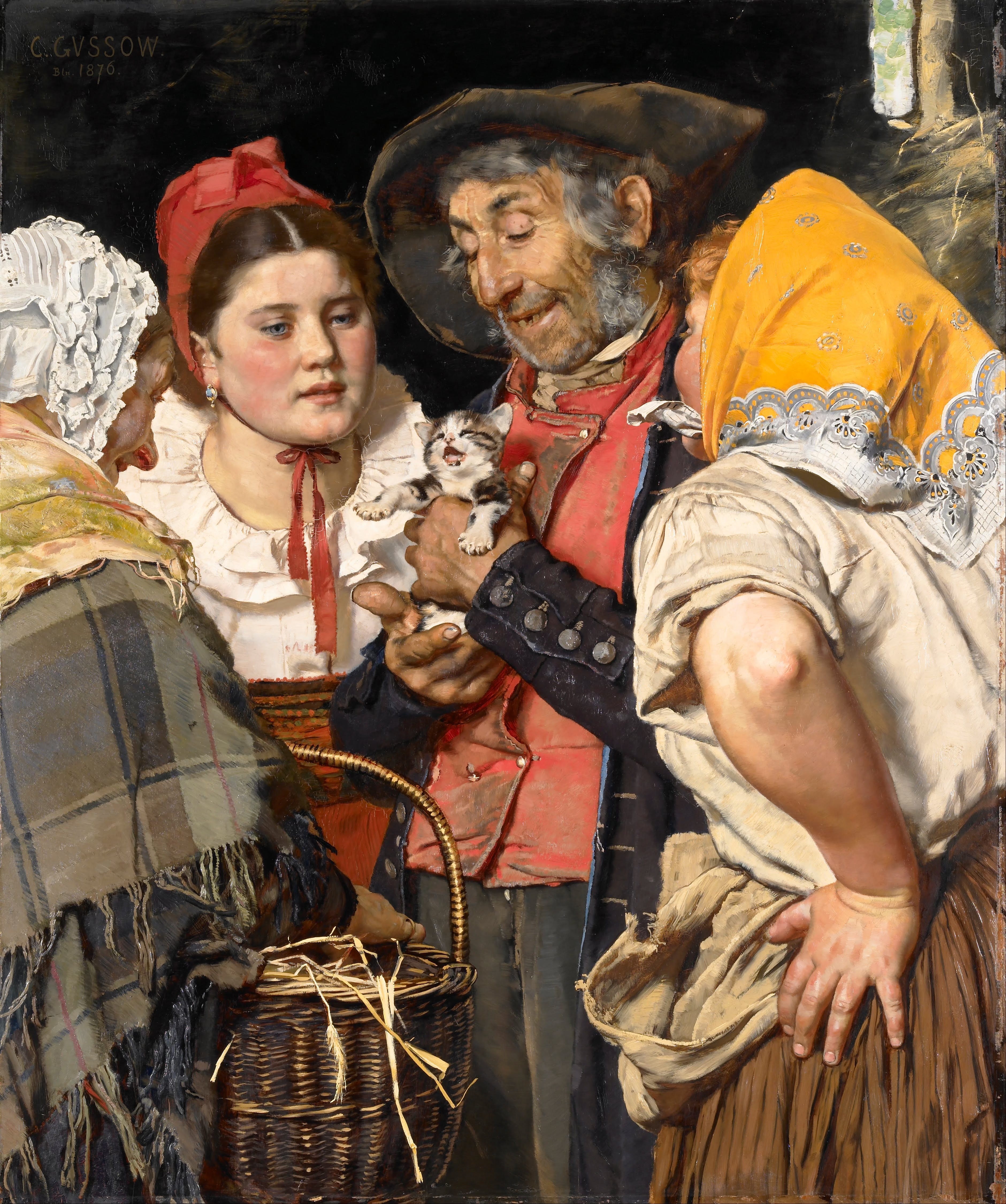
Cats quickly endeared themselves in Japanese culture, as seen in this 18th century painting of a kitten playing in a woman’s kimono.

In fact, wherever they appear in art history, no matter how different the culture or lifestyle of the people depicted, cats remain stubbornly, mischievously, recognizably cats.
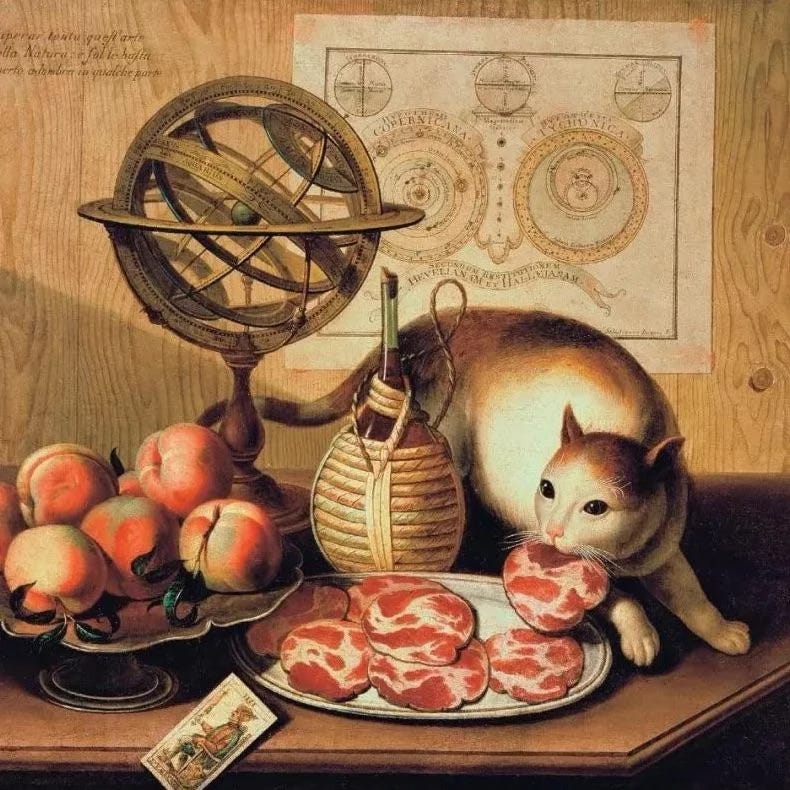
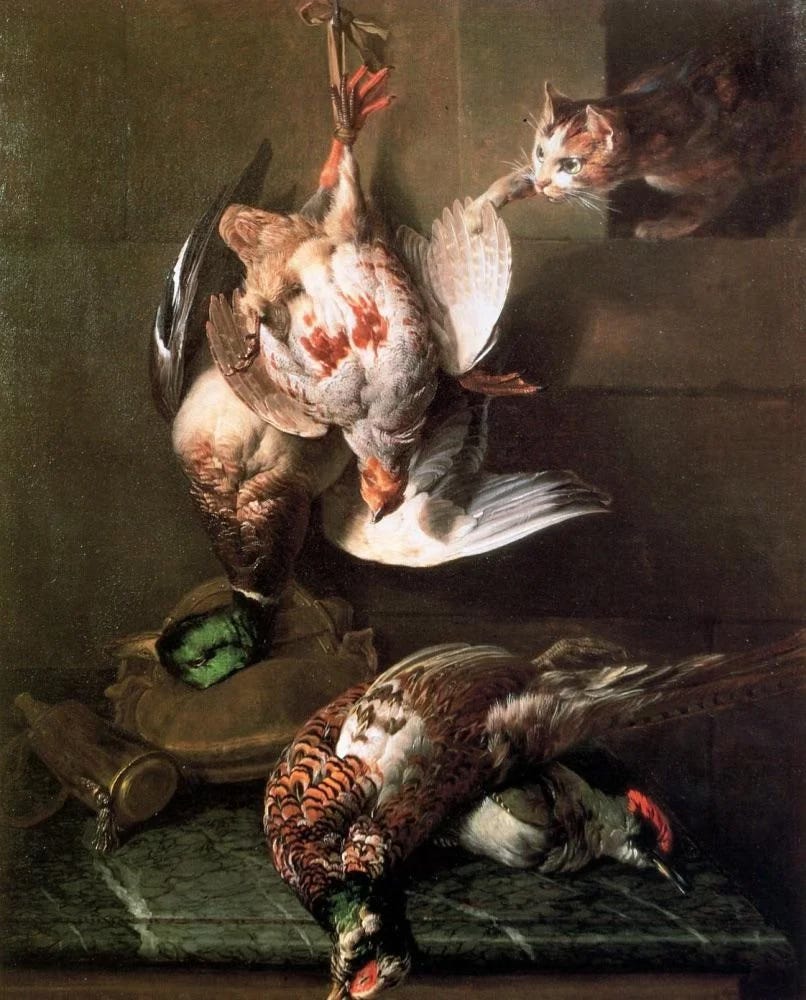
During the Age of Exploration, cats were a vital part of life on board ships, acting as good luck and protecting food stores from mice and rats. This tradition continued into the twentieth century, with many cats becoming beloved mascots among ships’ crews.
During the Age of Exploration, cats were a vital part of life on board ships, acting as good luck and protecting food stores from mice and rats. This tradition continued into the twentieth century, with many cats becoming beloved mascots among ships’ crews.
According to sailor legend, during World War II, a cat named Oskar served on the German battleship Bismarck. In May 1941, Bismarck was torpedoed and sank, killing all but 116 of the more than 2,200 crewmembers. Sailors on the HMS Cossack, one of Bismarck’s attackers, fished poor Oscar out of the North Atlantic, and the grateful cat promptly switched sides. In October of that year, unfortunately, the Cossack sank in turn; 159 crewmembers died, but Oskar again survived. The surviving crew members took Oskar with them to the HMS Ark Royal, and renamed him “Unsinkable Sam.” Unfortunately for the crew, the HMS Ark Royal was torpedoed less than a month later; fortunately for Unsinkable Sam, his name proved true.
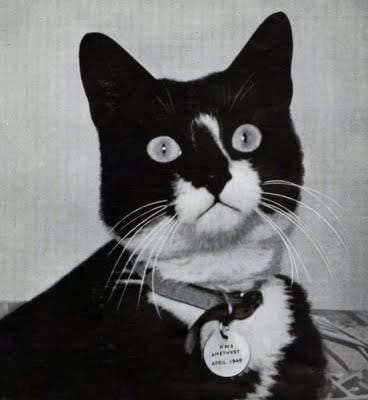
Having already used at least three of his nine lives, Unsinkable Sam retired to the “Home for Sailors” in Belfast, where he lived peacefully until finally dying of old age in 1955.
Feminists and Familiars
Of course, not all cultural depictions of cats are positive. Cats - with their silent footfalls, glowing eyes in the dark, and ability to silently appear behind you when you don’t expect them - are often understood as liminal creatures, lurking in the shadows and on the boundaries between worlds. In Scottish mythology, the Cat-sìth is a spectral fairy creature resembling a large black cat that stands on its hind legs and walks between realms. If mourners weren’t careful, the Cat-sìth would steal the souls of the recently departed before they could travel to the land of the dead; much like ordinary cats, they could be distracted by music, games, and catnip.
The Cat-sìth is likely also the origin of the association between witches and cats; some legends claimed that the Cat-sìth was not a fairy at all, but rather a witch who had turned into a cat too many times and become permanently trapped in that form.
By the Early Modern period, people frequently identified cats as witches’ familiars. In William Shakespeare’s Macbeth, for example, the first witch cries “I come, Graymalkin!” to her cat at the conclusion of the opening scene. One of Shakespeare’s sources was Reginald Scot’s 1584 Discoverie of Witchcraft, notes that “Some say they can transubstantiate themselves and others, and take the forms and shapes of asses, woolves, ferrets, cowes, apes, horsses, dogs, &c. Some say they can keepe divels and spirits in the likeness of tides and cats” (8).
Today, many superstitious people still associate cats - particularly black cats - with witches and Satan. Black cats are less likely to be adopted, and more likely - particularly around Halloween - to be the victims of abuse and random attacks.
Some creators, however, have embraced the spookiness of cats. In Miyazaki’s charming Kiki’s Delivery Service, the young witch Kiki travels around town as a broomstick courier, accompanied by her adorable familiar, Jiji.
Tamora Pierce’s Song of the Lioness series (1983-88) follows the brave Alanna, a girl who disguises herself as a boy to become a knight, and later fights openly as a talented warrior and sorceress. When she is a squire, the Goddess sends her a magical protector in the form of a small black cat with violet eyes that she names “Faithful.” Faithful saves Alanna’s life several times throughout the series, but more importantly, he provides glib and sarcastic commentary on her adventures in both war and peacetime.
And in Garth Nix’s Sabriel (1995), the titular Sabriel is a young woman who inherits her father’s necromancer duties of protecting the kingdom from invasions by the living dead. She also inherits Mogget, a sometimes-malevolent spirit bound into the form of a sarcastic white cat.3 When freed from the collar in his demon form, Mogget occasionally tries to kill Sabriel; when bound in his cat form, he proves a useful guide and ally.
It’s no coincidence that all of these spooky cats are the companions of women. Though beloved by humans of all genders, cats are frequently associated with women, particularly unruly or marginalized women. There are witches and their families, of course, but cats are also disparagingly referred to as the fate of bitter spinsters, such as in this 1789 cartoon of elderly women attending a cat’s funeral.
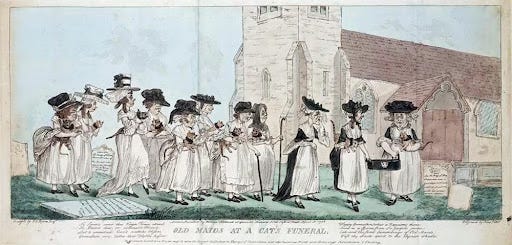
Suffragettes were also frequently depicted as being cats, or loving cats: the implication being that these pathetic women who want the vote were ugly, lonely, and had no greater meaning or companionship in their lives than cats.
Today, particularly among the New Right, the “crazy cat lady” stereotype persists. In 2021, J. D. Vance notoriously complained that the United States was being run by Democrats, corporations, and “a bunch of childless cat ladies who are miserable at their own lives and the choices that they’ve made and so they want to make the rest of the country miserable too.”
Many critics have noted a connection between negative attitudes towards cats and negative attitudes towards women. As Lilli Eve writes in a 2024 essay, “The intersection of misogyny and the ‘hatred of cats’ reflects a larger discomfort with traits associated with feminine independence. The autonomous, self-sufficient nature of cats parallels how society views independent women - as uncontainable and defying conventional control. The disdain for cats can thus serve as a proxy for discomfort with women’s liberation and rejection of subservient roles.”
Much like witches and their familiars, of course, women have re-appropriated the image of the “crazy cat lady” as an empowering one. When Donald Trump famously bragged that he could “grab [women] by the pussy,” feminists adopted an image of an angry cat defending itself in response: “Pussy grabs back.”
Both Beautiful and Absurd
I cannot conclude without acknowledging the special role that cats have played in our futuristic, hyperconnected world: “the internet,” a viral 2010 YouTube video famously declares, “is made of cats.”
The use of cats in humour and mass media is nothing new; the Victorians took pictures of their cats dressed up in costumes accompanied by humorous captions, and some of the first short films ever made featured cats.
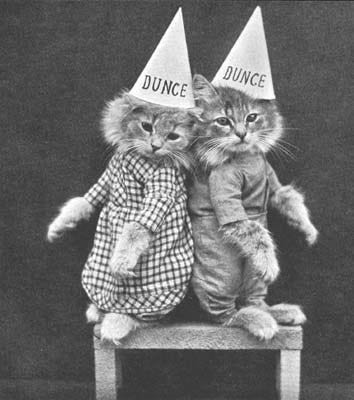
But cats are the indisputable stars of the 21st century viral internet, from Nyan Cat to Grumpy Cat to the garbled and cutesy language of the cats uploaded to I Can Haz Cheezburger.
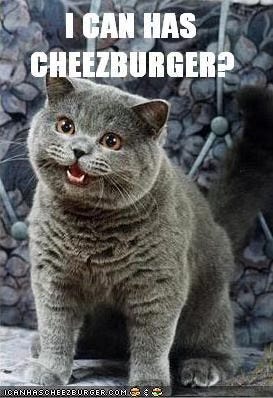
Critics have struggled to understand why cats have become so closely associated with internet culture; in a 2016 New York Times article Abigail Tucker suggests that they “remind us of our own faces, and especially our babies…[they’re] strikingly human but also perpetually deadpan.”
In a 2015 BBC article, meanwhile, Maria Bustillos argues that “Cat videos are the crystallisation of all that human beings love about cats, the crux of which is centred in the fact that cats are both beautiful and absurd. Their natural beauty and majesty are eternally just one tiny slip away from total humiliation, and this precarious condition fills us with a sympathetic panic and delight, for it exactly mirrors our own.”
Take, for example, the viral “Sail” cat, whose ambition is matched only by his utter failure:
Finally, Radha O’Meara argues that it is cats’ difference from humans that makes them so appealing to us. The internet is all about surveillance and performance, she writes, but cats are remarkably unselfconscious and aloof. “Unselfconsciousness is associated with privacy, intimacy, naivety and, increasingly, with impossibility,” she writes. “By allowing us to project onto the experience of their protagonists, cat videos invite us to imagine a world where we are not constantly aware of being watched, of being under surveillance by both human beings and technology.”
I find it particularly fascinating that, when we imagine the future, we often imagine cats as agents of both ungovernable chaos and humanizing warmth. I love the subplot on Star Trek: The Next Generation where the android Data, as part of his quest to become more human, adopts a cat, who he dubs “Spot.” In one episode, Data asks the Klingon warrior Worf to take care of Spot for him. He must provide him with his preferred food, he explains, and give him water and a sand box. “And you must talk to him,” he adds. “Tell him he is a pretty cat, and a good cat.”
“I will feed him,” Worf grunts in response.
In the video game Stray, meanwhile, you play as a cat navigating a postapocalyptic landscape populated by both hostile and benign robots. These robots, once created to be servants for humans, have gradually developed culture and sentience; a large part of this sentience is demonstrated in their affection for the cat protagonist.
“I think about 80% of the team are cat owners and cat lovers, and we are definitely passionate about this animal and the bond that we can have with them,” says Stray producer Swann Martin-Raget in an interview with Screen Rant. “That was really quite natural for us to try and make a game that is really a love letter to them.”
I don’t have a profound ending for this essay. It’s almost 2 a.m. as I write these words, and my eyes are heavy with sleep. Minnie is still keeping me company; a few minutes ago she stretched from a nap, mrowled, and then hopped up on the couch to demand I scratch her in the velvety place behind her ears. A moment later, when I turned my attention back to my laptop instead of letting her climb into my lap, she responded by nibbling on my ankle.
She is incorrigible. She is adorable. And, much like that Japanese emperor (and all cat owners throughout history), “I am convinced [she] is superior to all other cats.”
When it comes to cats, what should I add to my syllabus?
I want to hear from you, whether it’s in the comments on this post or in emails to me directly at roschmansyllabus@substack.com!
You may be wondering what an Irish monk was doing in a German abbey. At the same time, beginning in the 500s, Celtic Christians began an ambitious project to spread their particular understanding of Christianity across Europe, often in direct competition with Italian Catholics. One of the missionaries to follow this tradition was the monk Pirmin, who established Reichenau Abbey on Reichenau Island in southern Germany in 724. The island was located on a major highway leading from Germany to Italy, making it a natural stopping place for pilgrims from locales as diverse as Greece, Ireland, and Iceland. For hundreds of years, the monks at the Abbey followed both Irish and Benedictine monastic rules and practices. The Abbey was home to a scriptorium and artists’ workshop, and by the 10th and 11th century it became renowned throughout Europe for its production of gorgeously illuminated manuscripts.
Which, notoriously, Tom Hooper adapted into baffling and often laughably disturbing box-office bomb in 2019. Growing up, my whole family loved the Cats Broadway soundtrack and would play it on repeat on car rides. Some things, it would seem, do not translate well to film.
Particularly delightful and sarcastic in the audiobook, where he’s voiced by Tim Curry.